Hi, I am totally new to fly fishing. Do I (necessary) have to have Backing line? If I have 100 yards of fly line plus the leader; why do I need the backing line? With the 100 yards of fly line; I am never going to get to the backing line. Or do I need to cut the fly line? Does the fly line needs to be only a few yards long? Please help.
I'm sorry if my english/american doesn't fit in perfectly here…this seems to be the place where you have to do everything perfect, right, and off course like everyone else. In my opinion this is a perfect knot to tie, and not as weak as it seems and as everyone here means, i've used it for 30 years of flyfishing…fishing everything you can find in water. I think it's great 58 seconds, and a great knot to use when the fishing is the focus…and not sitting by the river tying complicated knots and maybe loose one or two fishes =) It makes me sad to read this shit here, and i'm feeling i have to leave a comment…try fishing some instead of sitting here leaving stupid comments to the one's trying to share some of their experiance..!!
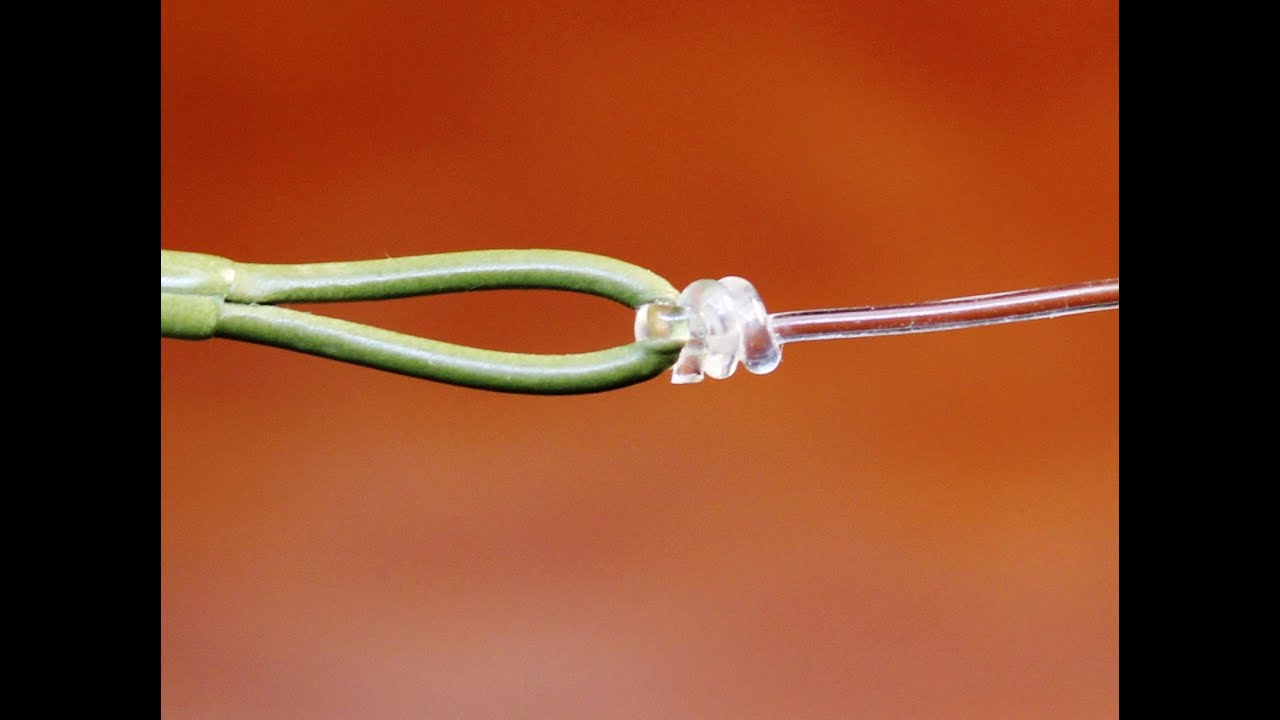
This is a horrible connection and is in fact weaker then a loop to loop connection. an angler should use a perfection loop in the leader and then make a loop to loop connection. putting a clinch not on the loop puts stress on a small area resulting in broken loops. Loop to loop has more surface area and spreads the stress more evenly. The welded loop does not have a multifilament core like the rest of the fly line. Get enough stress in that area and that knot is going to cut through the loop.
Ok, so you just tied a clinch knot to a fly line loop, right? Seems simple enough. Does it not get caught at the end of the rod? New to fly fishing and trying to find some easy knots here!
I know what it is why you claim the loop to loop sticks in the guides .. It's because you're not putting the loops together right .. You have to put them together so they form a square knot then it's a smooth as silk going thru the guides ..
Huh ?? NEVER !! You don't know what you're talking about, the damn loop that comes already on the fly line is there for a reason and that reason is, LOOP TO LOOP connections .. Now if you want to lose that, then cut the loop off and tie a nail knot with your butt to you fly line.You can do it any way you like but you're wrong in telling anyone that you're way is better than the loop to loop.. All the problems you posted, it's never happened once to me and Ive been fly fishing since 1988 ..
I don't care for the loop to loop either i like the clinch or improved clich. I can grip the knot with my figernails and pull the knot out and tie another leader on in no time. Ive perfected the improved clich over the years and use it most of the time. I usually can ty the not with no trimming needed jjst back to casting.
have you ever broken a rod when you tried to pull the leader out of the tip? have you ever had a tarpon pull the top two sections off your 12wt when the loop knot sticks? have you ever busted your light tippet just as you were netting a fish because he bolted and your leader knot hangs in the rod? just a couple thoughts… – mt
loop to loops are bulky and catch in the rod during the final stages of a fight. every fish my customers catch must be reeled close (tarpon, redfish, trout) this fly line to leader connection is smooth and simple. furthermore, a loop to loop connection is "knot" any easier than a clinch knot. i disagree that a loop to loop lays out better than a straight, fixed, in-line connection like i have demonstrated here. with respect, i would venture to say you have not tried it. thanks for watching – mt


LOOP TO LOOP!
I would have at least had like 1/4 inch tag just in case it slipped a little. other than that great vid.
hi this is the worst way to connect a leader to a fly line that has a welded loop on it it will weaken the loop and cut it in the end!
It's a great method, why are people so critical, I've used the 6 loop trilene knot for 40 yrs and it never failed me.
Hi,
I am totally new to fly fishing. Do I (necessary) have to have Backing line? If I have 100 yards of fly line plus the leader; why do I need the backing line? With the 100 yards of fly line; I am never going to get to the backing line. Or do I need to cut the fly line? Does the fly line needs to be only a few yards long? Please help.
I'm sorry if my english/american doesn't fit in perfectly here…this seems to be the place where you have to do everything perfect, right, and off course like everyone else. In my opinion this is a perfect knot to tie, and not as weak as it seems and as everyone here means, i've used it for 30 years of flyfishing…fishing everything you can find in water. I think it's great 58 seconds, and a great knot to use when the fishing is the focus…and not sitting by the river tying complicated knots and maybe loose one or two fishes =)
It makes me sad to read this shit here, and i'm feeling i have to leave a comment…try fishing some instead of sitting here leaving stupid comments to the one's trying to share some of their experiance..!!
Great Matt…keep up..!!
I dont like!
This is a horrible connection and is in fact weaker then a loop to loop connection. an angler should use a perfection loop in the leader and then make a loop to loop connection. putting a clinch not on the loop puts stress on a small area resulting in broken loops. Loop to loop has more surface area and spreads the stress more evenly. The welded loop does not have a multifilament core like the rest of the fly line. Get enough stress in that area and that knot is going to cut through the loop.
Clinch knot is also one of the weakest knots there is. Just tie an over hand knot. Lol
The connection from fly line to leader should never make it to the eyes on your rod…
You don't really know what your doing, do you?
Ok, so you just tied a clinch knot to a fly line loop, right? Seems simple enough. Does it not get caught at the end of the rod? New to fly fishing and trying to find some easy knots here!
I know what it is why you claim the loop to loop sticks in the guides .. It's because you're not putting the loops together right .. You have to put them together so they form a square knot then it's a smooth as silk going thru the guides ..
Huh ?? NEVER !! You don't know what you're talking about, the damn loop that comes already on the fly line is there for a reason and that reason is, LOOP TO LOOP connections .. Now if you want to lose that, then cut the loop off and tie a nail knot with your butt to you fly line.You can do it any way you like but you're wrong in telling anyone that you're way is better than the loop to loop.. All the problems you posted, it's never happened once to me and Ive been fly fishing since 1988 ..
I don't care for the loop to loop either i like the clinch or improved clich. I can grip the knot with my figernails and pull the knot out and tie another leader on in no time. Ive perfected the improved clich over the years and use it most of the time. I usually can ty the not with no trimming needed jjst back to casting.
have you ever broken a rod when you tried to pull the leader out of the tip? have you ever had a tarpon pull the top two sections off your 12wt when the loop knot sticks? have you ever busted your light tippet just as you were netting a fish because he bolted and your leader knot hangs in the rod? just a couple thoughts… – mt
loop to loops are bulky and catch in the rod during the final stages of a fight. every fish my customers catch must be reeled close (tarpon, redfish, trout) this fly line to leader connection is smooth and simple. furthermore, a loop to loop connection is "knot" any easier than a clinch knot. i disagree that a loop to loop lays out better than a straight, fixed, in-line connection like i have demonstrated here. with respect, i would venture to say you have not tried it. thanks for watching – mt
Why not loop to loop so you can change leaders? Lays out better on a cast as well. This isn`t a very good way at all.
thats just a 3 turn blood knot lol
Great easy note!